When it comes to commercial building insulation, spray foam insulation is the gold standard. If you’re a contractor, property manager, or business owner, knowing the advantages, science, and best practices of spray foam insulation can help inform your decisions that will lead to a more energy-efficient, comfortable, and durable building.
In our all-encompassing guide, we’ll take you through the world of polyurethane spray foam application, from the fundamentals all the way to master-level knowledge.
What is Spray Foam Insulation?
Spray foam insulation is a two-component spray-applied, Closed-Cell foam Insulation that over several passes, fills cavities of any shape and size. When applied, it expands to form an 8,000 to 10,000 BTU heat/cool barrier. It’s applied as thermal insulation, air sealing material, and moisture control on various types of commercial buildings, including warehouses, office buildings, retail, school,s and industrial structures.
There are two main types:
- Open-cell spray foam: Lightweight, pliable, best for interior walls and soundproofing.
- Closed-cell spray foam: Tougher, more rigid, and more water-resistant, making it best for roofing and exterior walls or beneath grade (a basement or crawlspace), due to its excellent moisture resistance.
Advantages of Applying Spray Foam in Commercial Premises
Superior Insulation Value
Closed-cell spray foam provides one of the highest R-values per inch of any insulating material, perfect for getting the greatest efficiency out of challenging spaces. This lowers HVAC burdens and energy expenditures.
Air and Moisture Barrier
Spray foam can fill all holes and gaps, big and small, thereby completely closing the structure of the building. This also works to reduce air leaks, condensation, and the inaccessibility for mold growth, which is important in your commercial buildings as well.
Structural Reinforcement
Closed cell foam provides walls and ceilings with added rigidity while helping to bring stability to your home or office building.
Noise Reduction
Open-cell spray foam is a sound dampener and is well-suited for office buildings and multi-tenant commercial spaces.
Longevity and ROI
Once applied, spray foam insulation will last for generations and requires very little maintenance, which will save you even more long term.
Commercial Spray Foam Application: Below is how we process your commercial project.
Step 1: Evaluation and Preparation
Every commercial property is indeed insulated differently. An experienced team take you through a detailed inspection of your building with the objective to establish where we should apply spray foam, select the type of foam required and work out the material quantity required.
Step 2: Preparation
Proper prep work is crucial. This includes:
- Washing and drying of material surfaces
- Closing HVAC boxes and electrical panels
- Masking of windows, floors, and other non-spray surfaces
Step 3: Mixing and Application
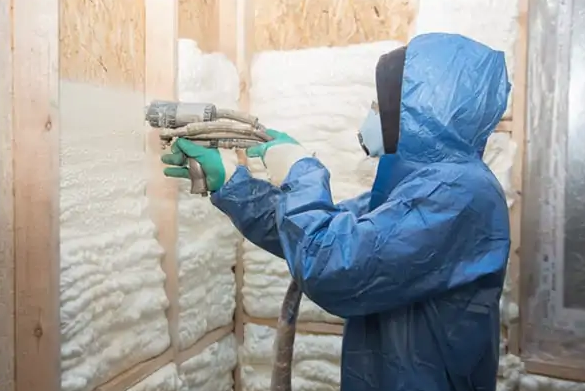
Spray foam is a blend of two different materials, mixed on-site by special equipment. The product is then sprayed onto surfaces in controlled lifts and left to cure. The foam is applied by professionally trained and experienced applicators in proper thickness.
Step 4: Curing and Inspection
It takes the foam a couple of minutes to expand and set up, but in some cases, it can take 24 hours for the foam to cure. Once cured, the coating is visually inspected for coverage and adhesion.
Safety Considerations
- The region should be ventilated in case of application due to the fume handling.
- Protecting Themselves: Technicians wear respirators, gloves, and full-body suits.
- Fire Ratings: Spray foam products are required to meet particular fire codes. In occupied spaces, foam is typically required to be covered with a thermal barrier, such as drywall.
Typical Commercial Application
- Roofing Systems: Closed-cell spray foam can provide thermal insulation and waterproofing in one product.
- Interior walls: Open-cell foam reduces air leakage and noise.
- Cold Storage Units: Perfect for food service and medical storage because of the high R value and moisture resistance.
- Steel Buildings: Spray foam sticks to metal and provides excellent temperature control.
Choosing the Right Contractor
Spray foam contractors are not all created equal. Look for:
- Appropriate licensing as well as insurance
- Commercially certified applicators
- Satisfied customer feedback and references for the finished works
- Prices are clear and solid warranties
A reputable installer, who applies spray foam professionally and effectively, can help create a safe and meaningful investment.
Final Thoughts
The good performance of a retail insulation system is largely determined by the quality of the spray foam insulation work. Whether you’re looking to spend less on your energy bill or you simply want a comfortable indoor environment, spray foam insulation is sure to live up to your expectations if it is applied correctly.
Whether you are retrofitting an existing building or insulating a new one, spray foam insulation is a cost-effective, long-term solution for your commercial property. With the proper planning, products, and professionals, you’ll receive rewards far beyond simply achieving temperature control.