When it comes to insulating residential and commercial buildings, spray foam insulation is one of the best products made available in today’s large and complex market. It’s not just another product; it’s considered by many as the gold standard of high-performance thermal protection. But what exactly is spray foam insulation? What is it, how does it work, and why are so many homeowners and contractors making the switch? Let’s dive into the details.
What is Spray-In Foam Insulation?
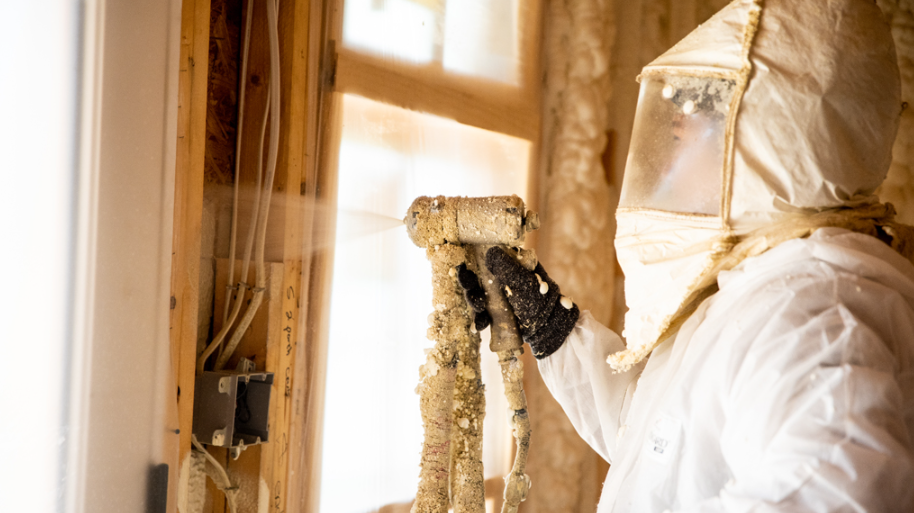
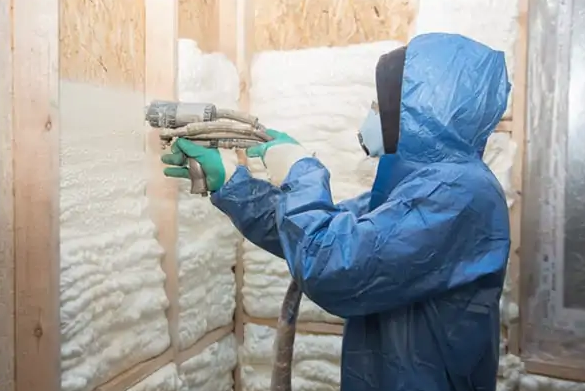
Composition Spray foam insulation is a two-component spritzer form of insulation that is comprised of isocyanate and polyol resin. When discharged and mixed through a nozzle, the two react and expand at a speed up to 30-60 times the liquid volume to a hard, air-tight barrier. This foam can be in walls, roofs, attics, crawl spaces, and other areas that are difficult to access.
The ability to insulate and air seal at the same time with just one product makes spray foam a high-performance material for temperature control, energy efficiency, and indoor air quality.
What is Spray Foam Made Of?
Spray foam insulation is made up of these key ingredients:
- Isocyanato (preferably MDI or methylene diphenyl diisocyanato)
- Polyol resin, Additives, Surfactants, Flame retardants, A blowing agent
These ingredients are stored in different tanks until they are combined at the nozzle. Mix and apply to any surface, and the foam expands and then hardens in just seconds, forming a superior seal that is fully airtight and moisture resistant.
There are two types of spray foam insulation, primarily:
Open-Cell Spray Foam
- Is soft and more bendable
- Lower density and more economical than closed-cell foam
- Permits some air and moisture induction
- Excellent for soundproofing and interior insulation
Closed-Cell Spray Foam
- Dense and rigid structure
- Higher insulation rating (Q-factor) – measures how efficient the insulator is. RACTORICYRNE LIMITED WARRANTIES R VALUES & FLAME SPREAD QUEEN FACTOR. Our information is supplied by our manufacturers & to be used as a general guideline.
- Functions as a vapor barrier and as a moisture barrier
- Great for the sides of buildings, walls, roofs, and basements
How Does Spray Foam Insulation Work?
Spray foam is some kind of magic, expanding to fill and seal the smallest and tiniest of cracks. It puffs up when sprayed in and fills every nook and cranny, sealing up air leaks that other, more traditional insulating materials, such as fiberglass or cellulose, can’t reach. This tight seal allows the casing to hold the air within the HVAC unit and the system to function more efficiently.
The result? Lower heating and cooling bills, year-round comfort, and even temperatures.
Spray foam not only insulates but also:
- Reduces noise transmission
- Prevents mold and moisture accumulation
- Reinforces structural integrity (especially when used with closed-cell foam)
- Increases air quality in homes by decreasing allergens and contaminants
Advantages of Using Spray Foam Insulation
There are a host of reasons why you should opt for spray foam insulation in your home or business:
- Kiss High Energy Bills Goodbye: Spray foam consumption-based amounts will cut your energy costs in half with an unparalleled air barrier.
- Longevity: It lasts for decades without sagging or settling.
- Resistance to Moisture: Closed-cell spray foam is a vapor retarder; it resists water absorption and mold growth.
- Green Friendliness: More contemporary spray foams are made with environmentally friendly blowing agents that have lower global warming potential (GWP).
- Climate Comfort: No more drafts, hot/cold spots, or outside noise.
Where can you apply Spray Insulation Foam?
Spray foam is so multifaceted. It can be used in:
- Attics
- Basements and crawl spaces
- Walls (inside and outside walls)
- Roofs and ceilings
- Windows, doors, and rim joists
- Garages and metal buildings
If you are creating a new building or remodeling an older one, spray foam can be set up in order to give the insulation you require.
Does Spray Foam Insulation Work?
The higher upfront costs of spray foam compared to other insulation options are often recouped through savings on energy bills, maintenance costs, and possible modest size reduction. In climates with temperature extremes or high levels of humidity, it’s especially helpful.
with its durability and minimal maintenance, a sensible, long-term solution for energy-aware property owners.
Conclusion
Spray-in-place foam is not just a contemporary insulation choice, it’s a revolution in the way we manage temperature, humidity, and the utilization of energy in our structures. Spray foam is created from highly reactive chemicals that blend to fill almost every space, crevice, and crack in your home.
Then you’re probably starting to contemplate an upgrade or buying a new home, making this the perfect time to look into the advantages of installing spray foam insulation.